
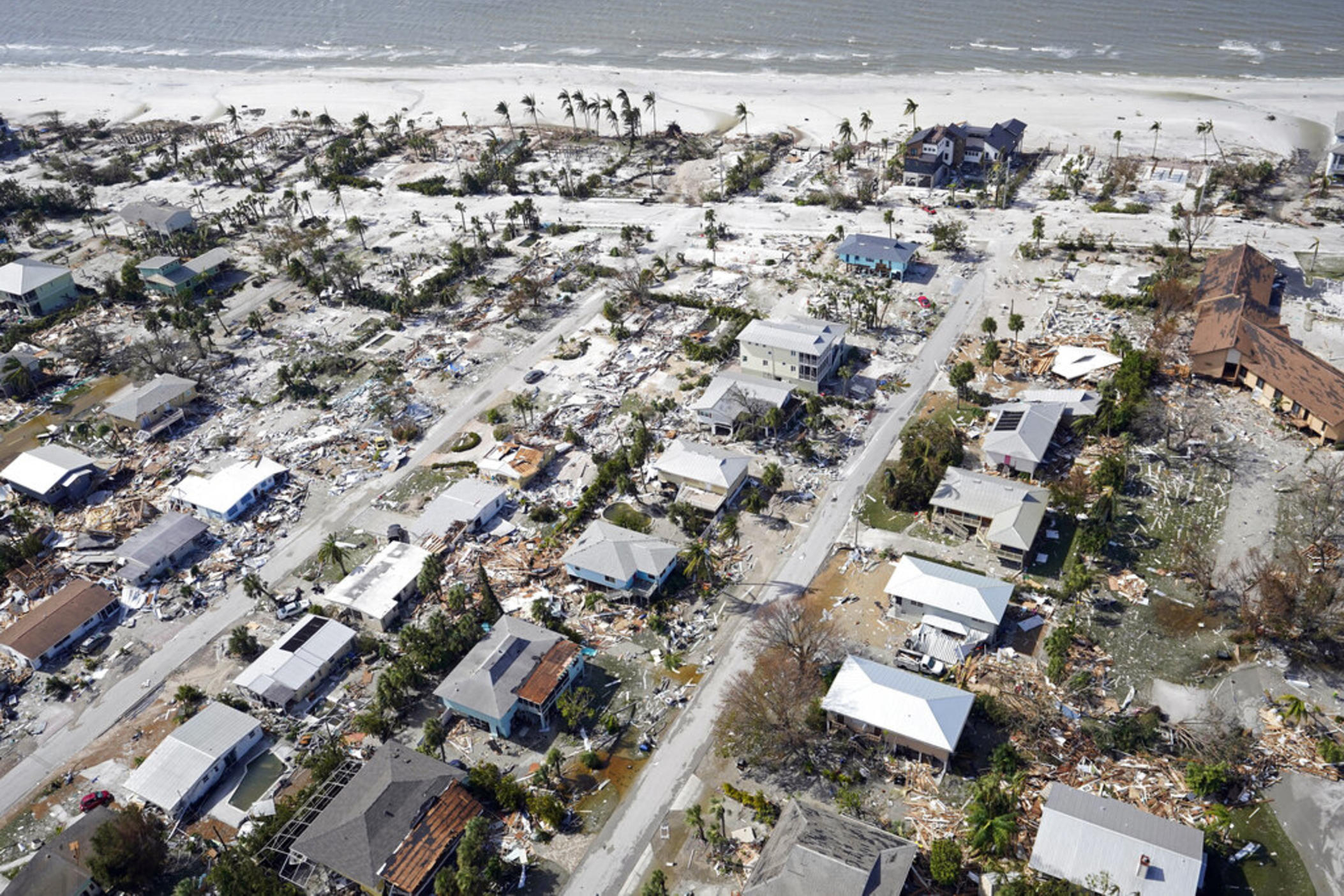
Every year, millions around the world are confronted by powerful tropical cyclones, forced to watch as wind and water erase homes, possessions, and entire communities. Many of their shelters, never designed to survive the modern climate, provide little protection against the ferocious storms raging around them. The U.S. Gulf Coast region, known for its stunning beaches and vibrant cultures, is no exception, having experienced 11 of the 15 costliest hurricanes in history. Collectively, these storms have taken thousands of lives and caused hundreds of billions of dollars in damage.
But what if things didn’t have to be this way? What if we could build communities where lights stay on, houses remain intact, and essential services continue functioning even in the strongest of storms? This isn’t a futuristic fantasy—it’s a reality that already exists.
In recent years, one community in Southwest Florida has drawn attention to its incredible design, allowing it to withstand even the most powerful hurricanes: Babcock Ranch. Since construction began in 2015, this pioneering town has been battered by four powerful hurricanes—Irma, Ian, Helene, and Milton—yet each time, the town emerged virtually unscathed, even sheltering over 2,000 people from surrounding areas [1,3].
The town’s success is no accident; it is a result of clever, sustainable design. Although the Saffir-Simpson scale, the primary hurricane intensity scale used in the Western Hemisphere, focuses solely on wind, water is by far the biggest killer [2]. Most Florida homes are built to withstand Category 4 or 5 winds, but they often fail due to foundation loss caused by flooding [5]. Babcock Ranch’s success stems from layered defense systems that can be broken down into three categories: strategic location, ecological water management systems, and hardened engineering.
The first foundational defense is the town’s location. The community is deliberately situated 20-30 miles from Florida’s coast, which, in addition to the region’s natural barrier islands, largely eliminates the devastating threat of coastal storm surge, the deadliest component of many tropical cyclones [2,5]. Additionally, all development is situated on lands approximately 30 feet above sea level, placing the entire community outside of major flood zones [5]. The town was also built in tandem with the surrounding wetlands, unlike typical Floridian developments that use grid-like plans to maximize land usage [7]. In many conventional neighborhoods, developers fill in natural protections, such as ditches and wetlands, in order to maximize sellable properties [7]. While efficient for real estate, these concrete grids disrupt the earth’s natural drainage systems and water barriers, exacerbating flooding effects of hurricanes. In contrast, Babcock Ranch builds around natural flow-ways and wetlands, allowing the landscape to absorb and redirect floodwaters [5].
These wetlands are the basis of the community’s water management system, absorbing massive amounts of rainfall and slowing the flow of water into the town. Designers also built a series of interconnected drainage bowls that water gets directed to. Ahead of powerful storms, these bowls can be drained to maximize their storage capacity [5]. In Babcock Ranch, even the roads are intentionally constructed lower than surrounding infrastructure: in the case of flooding, they are designed to serve as temporary drainage channels, directing excess water away from homes and essential structures before slowly releasing it [5]. This water is then routed into a natural drainage system the town was built on, slowly flowing into the nearby Caloosahatchee River, which eventually drains back into the Gulf of Mexico. By ensuring the gradual flow of water, Babcock Ranch reduces flooding risks for downstream communities [5].
However, hydrologic design is only one component of Babcock Ranch’s broader resilience strategy. Similar to most of Florida, the majority of the town’s buildings can withstand 150 mph winds, but essential buildings, such as grocery stores and designated shelters, adhere to even stricter regulations to ensure they stand during and after a storm [3]. For example, while homes are elevated by five feet, leaving them one foot above a theoretical 100 year storm event, offices and grocery stores are elevated by six feet, providing an additional safety margin of two feet [5]. The community is also entirely solar powered by an on-site solar farm, with all internet and power infrastructure being buried underground, ensuring that power stays on even during the strongest of storms [6].
The true testament to Babcock Ranch's design came with Hurricanes Ian and Milton, two of the most powerful storms to hit the region. While many neighboring towns were left reeling following both storms, enduring weeks without power and utilities, the damage at Babcock Ranch was remarkably minor: a few fallen trees but not a single structural failure. Even more significantly, the town’s designated shelter, the high school field house, sheltered thousands of residents from surrounding communities between the two storms [3].
Babcock Ranch is more than just a real estate development; it’s a compelling demonstration of proactive planning and sustainable construction. It proves that the catastrophic cycle of clean-up and rebuilding, so often seen in vulnerable communities, is not something they must endure forever. By designing with nature, not against it, this small Florida town is offering a powerful vision for how communities can thrive - even in the face of an increasingly volatile climate [4].